Features & Benefits
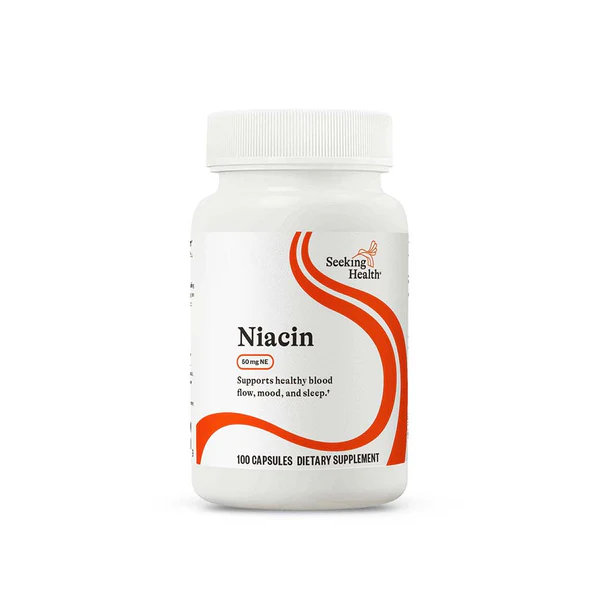
Niacin is a vitamin B3 supplement containing nicotinic acid, the flushing form of niacin, formulated to support cardiovascular health, healthy cholesterol levels, energy production, circulation, mood, metabolism, and healthy aging. Niacin also plays a critical role in NAD+/NADH production, cellular energy pathways, DNA repair, nervous system function, and serotonin production.
Seeking Health specifically markets this formula to support:
- Cardiovascular and circulatory health
- Healthy blood flow
- Energy production
- Mood and cognition
- Healthy metabolism
- Digestive function
- Skin and cartilage health
- Healthy cholesterol levels
- NAD+ and methylation support
The formula contains nicotinic acid, which may produce a temporary “niacin flush” involving warmth, redness, tingling, or itching due to vasodilation and increased circulation.
Dose & Administration
Suggested Use
- Take 1 capsule with food
- May be taken any time of day or night
- Use as needed or as directed by a healthcare professional
Niacin Flush Information
Niacin may naturally cause:
- Warmth
- Flushing
- Tingling or “pins and needles”
- Redness of the skin
This is considered a normal physiological response and typically lessens with continued use. Taking niacin with food may reduce flushing.
Storage
- Keep tightly closed in a cool, dry place
- Keep out of reach of children
Caution & Contraindications
Consult a Healthcare Practitioner Before Use If:
- Pregnant or breastfeeding
- Taking medications
- Managing a medical condition
- Giving to children
Potential Side Effects
Possible side effects may include:
- Flushing
- Skin redness or itching
- Warm sensation
- Tingling
- Headache
- Dizziness
- Digestive upset
- Nausea
Higher doses of niacin may increase the risk of:
- Liver stress
- Elevated blood sugar
- Increased uric acid
- Low blood pressure
- Gastrointestinal irritation
Contraindication Considerations
Use caution in individuals with:
- Liver disease
- Diabetes or impaired glucose tolerance
- Gout or elevated uric acid
- Peptic ulcer disease
- Low blood pressure
- Heavy alcohol use
Niacin may interact with:
- Cholesterol-lowering medications (statins)
- Blood pressure medications
- Diabetes medications
- Blood thinners

Reviews
There are no reviews yet.